A Short History of the United States by Robert V. Remini
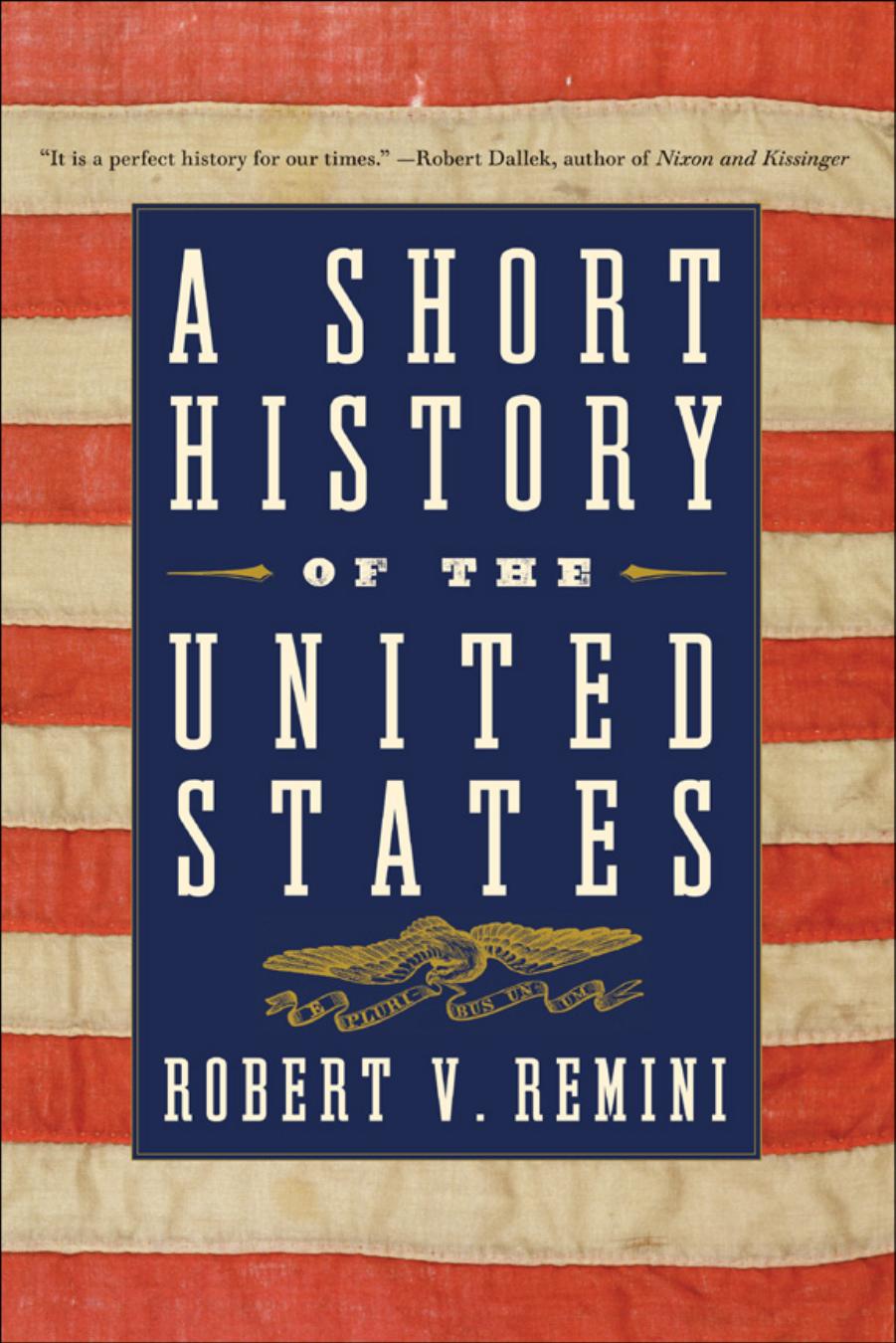
Author:Robert V. Remini
Language: eng
Format: epub, pdf
Publisher: HarperCollins
ONCE ROOSEVELT WON election as President in 1904 against the Democrat Alton B. Parker, the Socialist Eugene Debs, the Prohibitionist Silas C. Swallow, and the Populist Thomas E. Watson, he felt more comfortable about urging additional social and economic reforms. In his first message to Congress, after his election on November 4, he proposed several measures regarding child labor, slum clearance, and the strengthening of investigative agencies. These proposals resulted in some of the most important legislation of his administration, starting with the Pure Food and Drug Act, passed on June 30, 1906. This measure forbade the manufacture, sale, and distribution of adulterated drugs and food in interstate commerce, and it prohibited fraudulent labeling of these products. Congress also enacted the Meat Inspection Act, but it took the publication of Upton Sinclair’s book The Jungle to expose the filthy conditions in meatpacking houses and neutralize opposition to its passage. The law required sanitary conditions and federal inspection of meatpacking facilities in any operation involved in interstate commerce.
To a very large extent the President’s efforts reflected a larger Progressive movement that had developed within the country which demanded an end to the abuses of greedy corporations and machine politics. Several states had already initiated such reforms by requiring more accountability from business, and by returning government to the electorate. Wisconsin, for example, enacted railroad legislation and an income tax during the governorship of Robert M. La Follette. Other states joined the push toward progressivism, by adopting the direct primary and the initiative and referendum to allow voters a greater voice in deciding legislation. To a large extent the movement was advanced by a number of writers, such as Sinclair, Ida Tarbell, Henry Demarest Lloyd, Lincoln Stephens, and David Graham Phillips, who exposed corruption and greed in business and in both state and national politics. Magazines, including Cosmopolitan, McClure’s, and the American, which had national circulation, published their reports, and these stories became more and more sensational as they delved deeper into the activities of such monopolies as the Standard Oil Company, the beef trust, and the Chicago stockyards, as well as corruption in city governments and the United States Senate. Roosevelt called them “muckrakers,” comparing them to the man with the muckrake in John Bunyan’s Pilgrim’s Progress, who never sees what is around him because he is forever looking down at the filth he is raking.
The Progressive movement was an important development in the evolution of American democracy. It urged legislation that would allow the electorate to have a voice in initiating legislature that would benefit them; it urged legislation that would permit the public to approve or disapprove measures passed by state legislatures; and it urged legislation that would permit voters to recall elected officials who, for one reason or another, did not serve the public well-being. The electorate did not always take advantage of the proposed reforms, however. Indeed, compared with citizens of other democracies around the world, Americans have a poor record of exercising their voting rights. The
Download
A Short History of the United States by Robert V. Remini.pdf
This site does not store any files on its server. We only index and link to content provided by other sites. Please contact the content providers to delete copyright contents if any and email us, we'll remove relevant links or contents immediately.
| Anthropology | Archaeology |
| Philosophy | Politics & Government |
| Social Sciences | Sociology |
| Women's Studies |
The Secret History by Donna Tartt(19097)
The Social Justice Warrior Handbook by Lisa De Pasquale(12193)
Thirteen Reasons Why by Jay Asher(8915)
This Is How You Lose Her by Junot Diaz(6891)
Weapons of Math Destruction by Cathy O'Neil(6283)
Zero to One by Peter Thiel(5805)
Beartown by Fredrik Backman(5763)
The Myth of the Strong Leader by Archie Brown(5511)
The Fire Next Time by James Baldwin(5452)
How Democracies Die by Steven Levitsky & Daniel Ziblatt(5221)
Promise Me, Dad by Joe Biden(5155)
Stone's Rules by Roger Stone(5089)
A Higher Loyalty: Truth, Lies, and Leadership by James Comey(4965)
100 Deadly Skills by Clint Emerson(4929)
Rise and Kill First by Ronen Bergman(4792)
Secrecy World by Jake Bernstein(4755)
The David Icke Guide to the Global Conspiracy (and how to end it) by David Icke(4721)
The Farm by Tom Rob Smith(4516)
The Doomsday Machine by Daniel Ellsberg(4492)
